
The complete guide
A Practical Guide to Choosing a Putting Green Mat
Practising putting at home often starts with finding a clear stretch of floor. The next problem is knowing where to aim and where to start each time. Without clear reference points, it can be hard to repeat the same setup or separate an alignment drill from a pace drill.
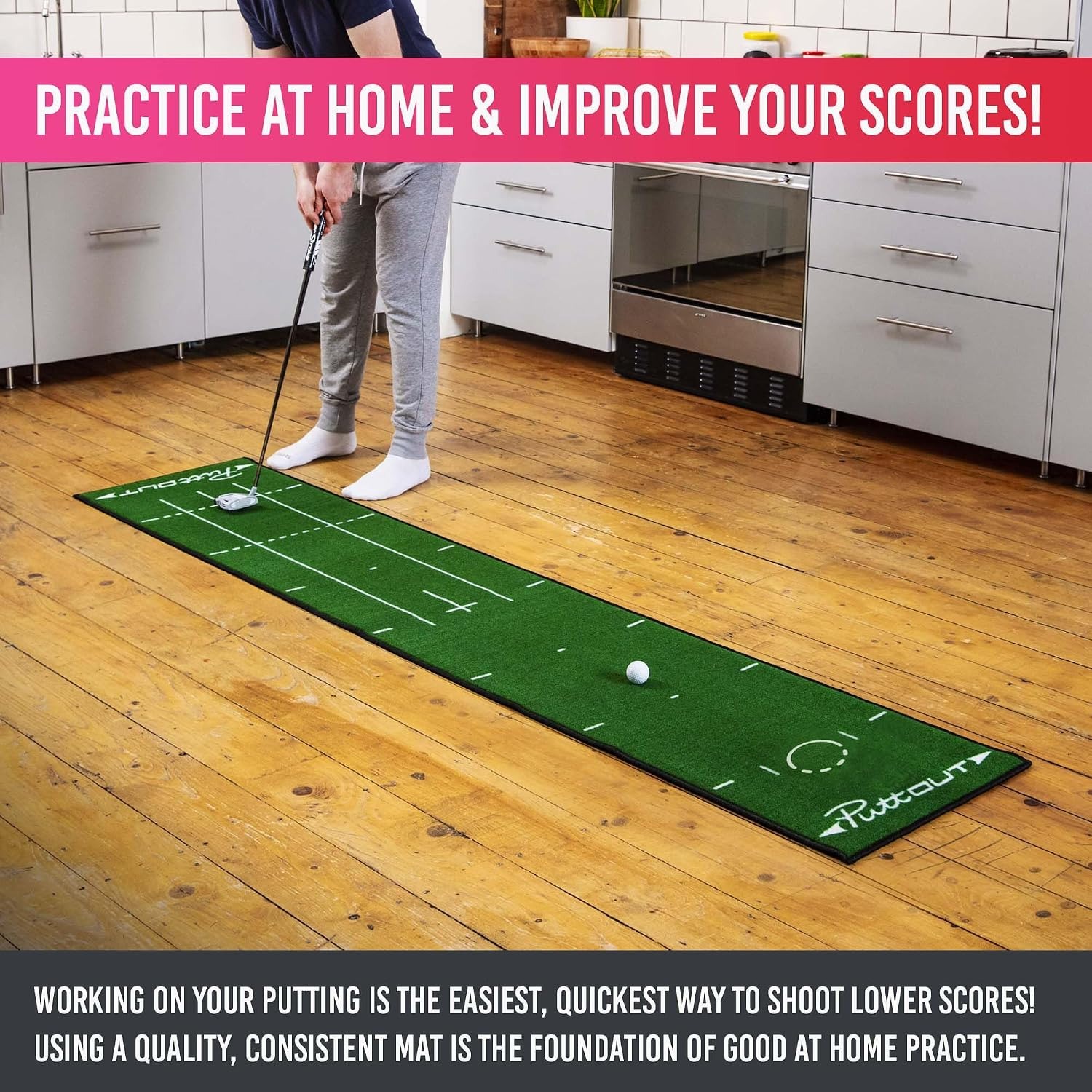
This Putting Green Mat gives that practice a defined space. It measures 240 x 50 cm when laid out and has printed lines, distance markings and targets. Before choosing it, consider the room it needs, the practice you want to do, and where it will go when you finish.
Start with your floor space
The first measurement to check is the unrolled surface size, not the smaller product dimensions shown elsewhere in the specifications. The practice area is 240 cm long and 50 cm wide. The maker's description also lists 16 x 16 x 50 cm, but it does not explain those dimensions further.
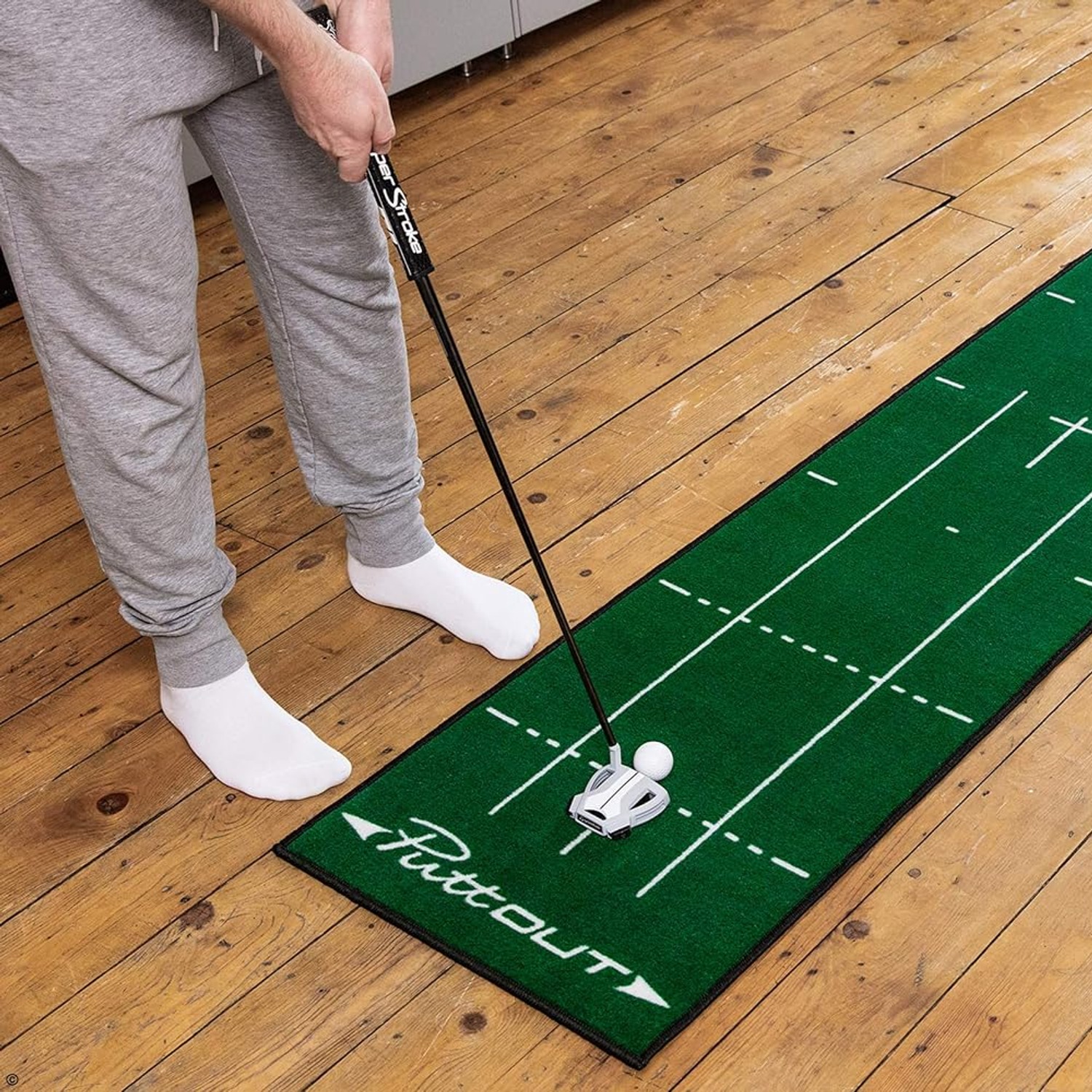
Measure the full length on your floor. Then stand beside that space as though you were about to putt. You need room for your feet, the putter and a comfortable stroke, not just enough room to lay down the mat.
Think about doors, chair legs and routes through the room. A putting mat for small spaces can still interrupt a walkway. If you need to pack it away after every session, choose a spot where laying it out and collecting your equipment will be simple.
A flat, evenly supported area is a sensible starting point. The maker does not confirm suitability for every type of hard floor or carpet. Check how the mat sits on your chosen surface before beginning a practice session.
Understand the surface and backing
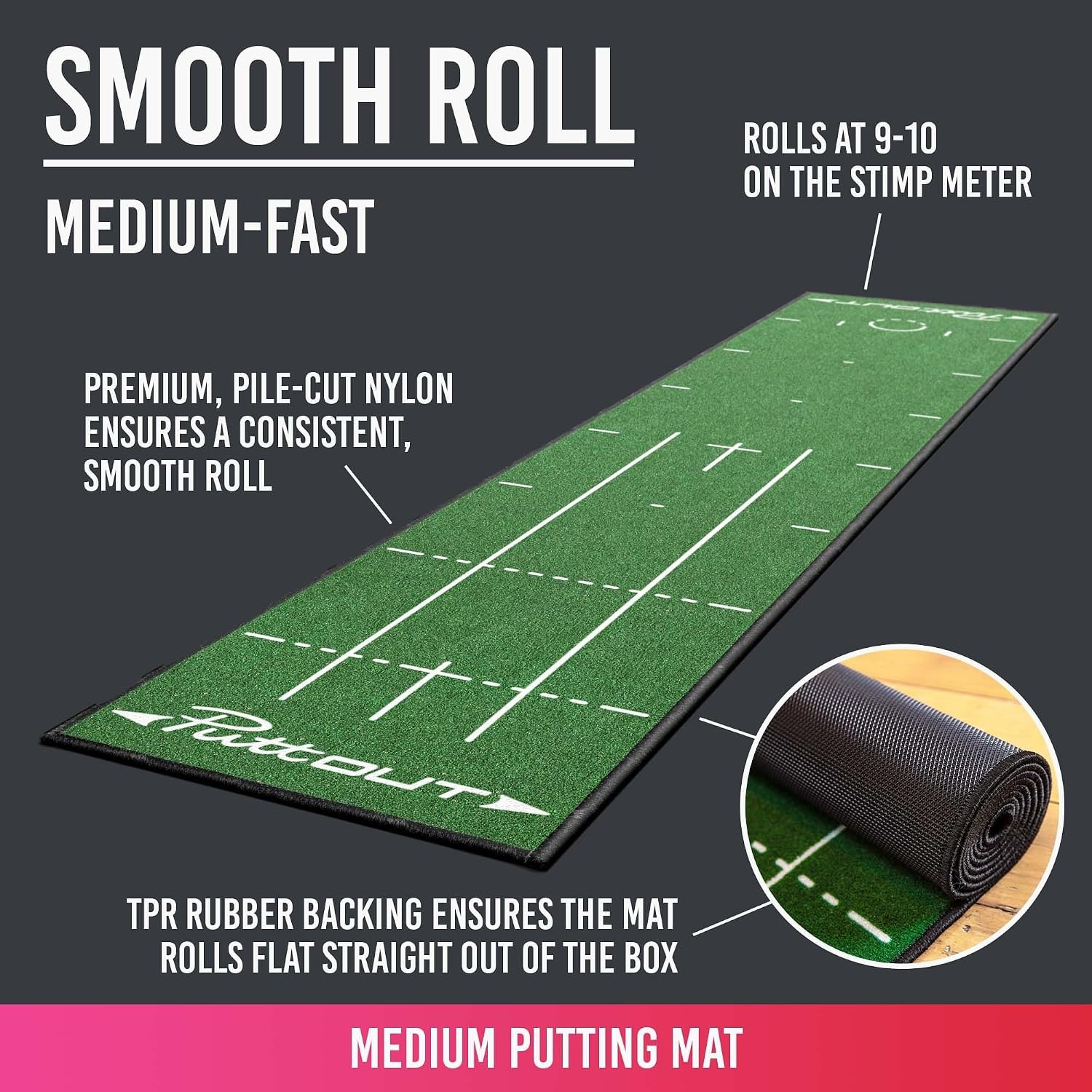
This nylon putting mat has a pile-cut surface with rubber backing. The description also identifies the backing as TPR rubber. These are the stated materials, rather than evidence of a particular result on every floor.
The listed surface speed is 9–11 on the Stimp scale, described as medium-fast. That gives you a stated speed range to consider when comparing mats. It should not be treated as a promise that the mat will copy the greens at your regular course.
A rubber backed putting mat also needs a suitable surface beneath it. Check for dirt, uneven support or movement before using it. Rubber backing alone does not tell you how much grip it will have on a specific floor finish.
If you are searching for a non slip putting mat, make that floor check part of your setup. The maker does not include floor-by-floor slip testing. Avoid assuming that one backing material behaves the same way in every room.
Decide what you want the markings to do
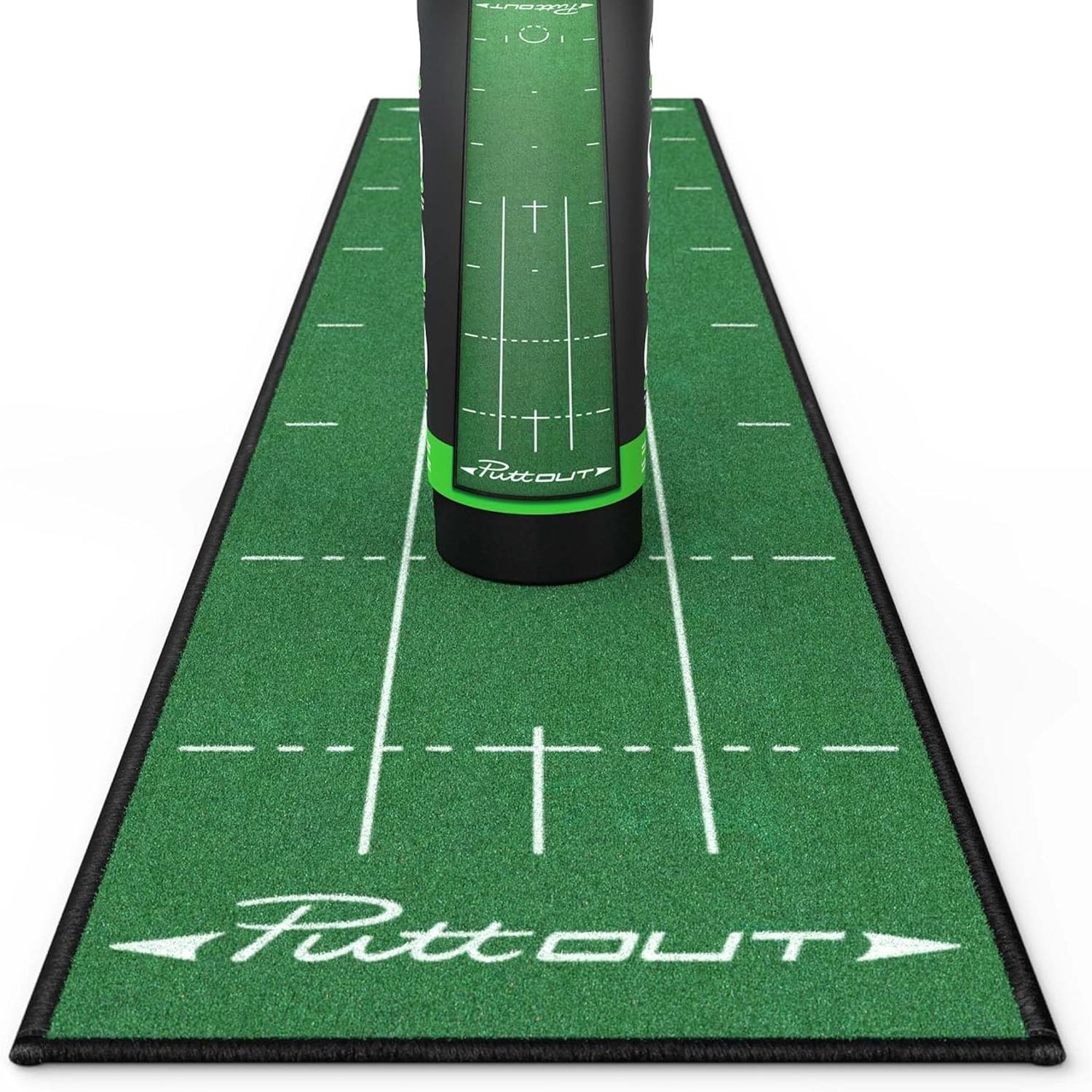
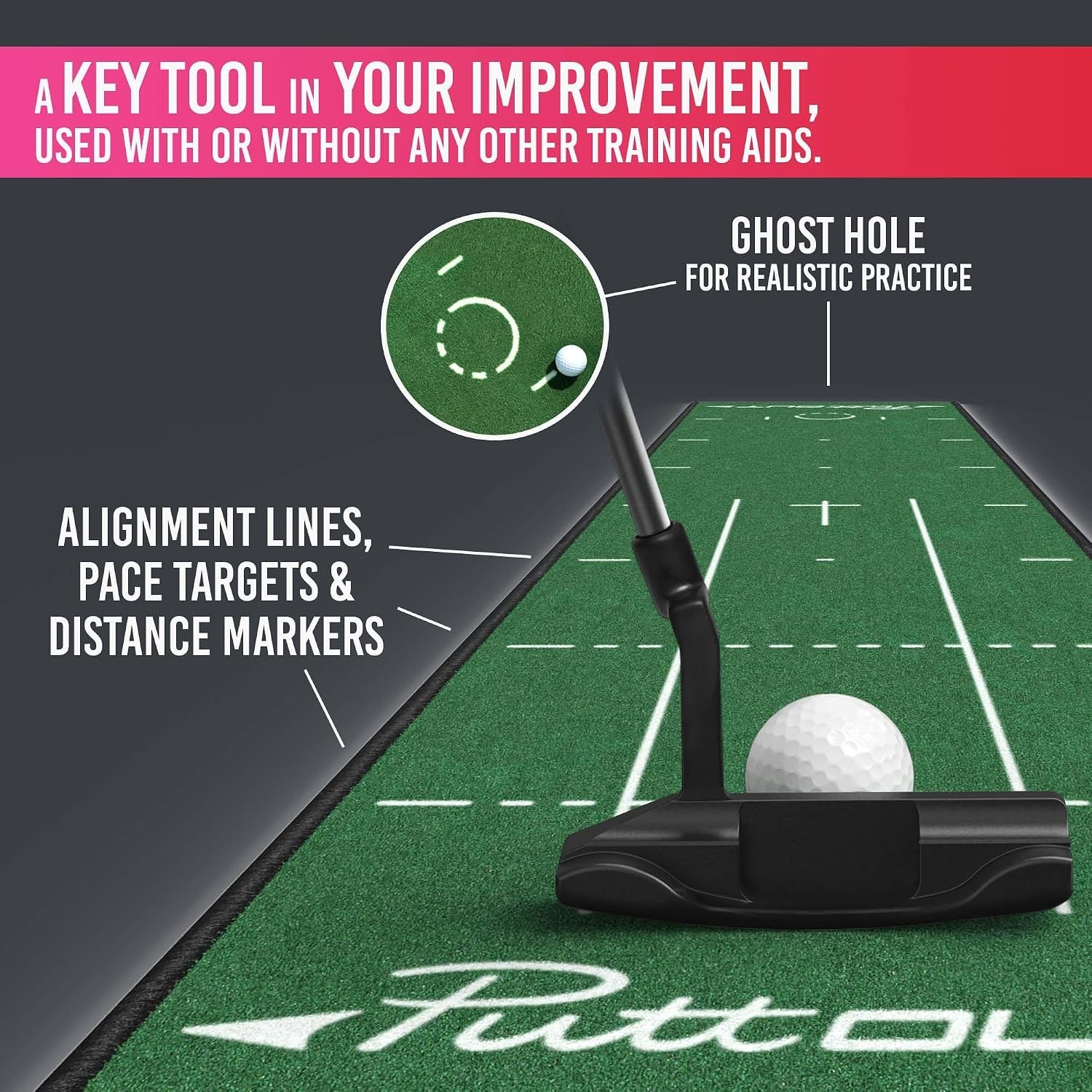
The printed features are a central part of this golf practice mat. It has alignment lines, pace targets and ghost holes, along with distance markings up to 6 ft. Each type of marking can give you a different point of reference.
For alignment practice, choose a printed line and use it consistently. The aim is to have a clear reference rather than changing your setup without noticing. You do not need to use every printed feature in the same session.
For putting pace practice, select a target area and watch where the ball finishes. The ghost holes are printed references. The maker does not describe a recessed cup, so this is not the same setup as watching a ball drop into a hole.
Distance markings let you return to a stated starting point without measuring it again. That is useful when you want to repeat a simple drill. Keep in mind that the marked distances extend to 6 ft, while the full mat is longer.
Keep a practice session simple
A putting mat with targets gives you options, but a session does not need to cover all of them. Begin with one task. You might use an alignment line first, then change to a pace target once you are ready.
Use your own putter and balls. The included-components list names one mat only. There is no stated automatic ball return, so leave time and space to collect balls between sets rather than expecting the mat to send them back.
For a repeatable setup, use the same marked starting point for a short set of putts. Watch the starting direction or finishing position, depending on the task you chose. Changing the distance after every stroke can make it harder to compare what happened.
This is a way to organise practice, not a guarantee of lower scores. The mat provides a surface and printed references. Your routine, technique and the conditions you later play in are separate parts of the picture.
Consider who will use it
A home putting mat may appeal to someone who wants a set place to practise without leaving the house. The visible lines can provide a clear starting point for someone new to putting drills. A more experienced golfer may prefer to focus on one target or distance.
The maker does not state a left- or right-handed designation in the maker's description. When planning the space, check the side where the user will stand. A mat that fits neatly beside furniture may still leave too little room for a comfortable setup.
If more than one person will use it, consider their space needs rather than measuring for only one stance. Also decide where the putter and balls will be kept. Those small setup choices can matter when the practice area doubles as a living space.
For a golf practice gift, floor space is worth checking before purchase. It is also helpful to know whether the recipient already owns a putter and balls. Neither is listed as part of this pack.
Look closely at storage
The description includes a dense cardboard cylinder for storing the mat rolled. It links this storage method with keeping the surface pressed and avoiding creases. The supplied specification also uses the term foldable for the form factor.
Those details are not quite the same instruction. For everyday storage, rolling into the described cylinder is the approach supported by the product description. There is no need to introduce sharp folds just because the form-factor field says foldable.
Before packing away a roll up putting mat, remove loose dirt and check that it is dry. Roll it neatly rather than forcing a bent section into place. Keep the storage cylinder somewhere it will not be crushed.
The listed item weight is 2.72 kg. If you plan to move it often, think about where you will keep it and whether that spot is easy to reach. The maker does not state a separate carrying handle or carry bag.
Choose care over guesswork
Detailed washing instructions are not given by the maker by the maker. A cautious routine is to remove loose debris gently and use a lightly damp cloth for small marks. Allow the surface to dry fully before rolling it for storage.
Do not assume that nylon means the whole mat can go in a washing machine. The backing and printed surface also need to be considered. Check any instructions that arrive with the product before using detergents or other cleaning products.
Outdoor durability is not specified either. If your intended practice area is outside, seek confirmation before relying on it for that use. Nothing in the maker's description establishes that the mat can be left in rain or stored outdoors.
Compare features, not promises
When comparing a compact putting green with other options, begin with the facts that affect daily use. Here, those include the 240 x 50 cm surface, nylon construction, rubber backing and printed practice guides.
Next, consider what is not listed. There is no stated automatic return, recessed cup or included putter. A warranty is not specified. If one of those features is important to your purchase, ask before ordering rather than filling the gap with an assumption.
The best home putting mat for your needs is one that fits your space and your intended routine. A longer feature list is not useful if the mat cannot stay flat in your room or is awkward to store. Choose around how you will actually practise.
Check delivery and return details
The maker does not give a delivery timeframe. Check the delivery information available for your Canadian address before ordering, particularly if you need the mat for a gift or a planned date.
Change-of-mind returns are available for 14 days from delivery, and the customer pays return postage. Your rights under provincial consumer protection law also apply. Keep those terms in mind when deciding whether the size and format suit your needs.
The short version
Choose this Putting Green Mat if you want a 240 x 50 cm practice surface with printed alignment lines, pace targets, ghost holes and distance markings up to 6 ft. It has a nylon surface, rubber backing and a listed medium-fast speed range.
Measure your room, allow space for your stance, and plan to use your own putter and balls. With those basics checked, you can decide whether this straightforward practice format belongs in your home.