
The complete guide
Choosing a Golf Rangefinder with Slope
Judging distance by eye can leave you unsure before a shot. A flag may sit above you, a green may fall away, or a background tree may make the target hard to pick out. A golf rangefinder gives you a measured reference to consider alongside what you can see.
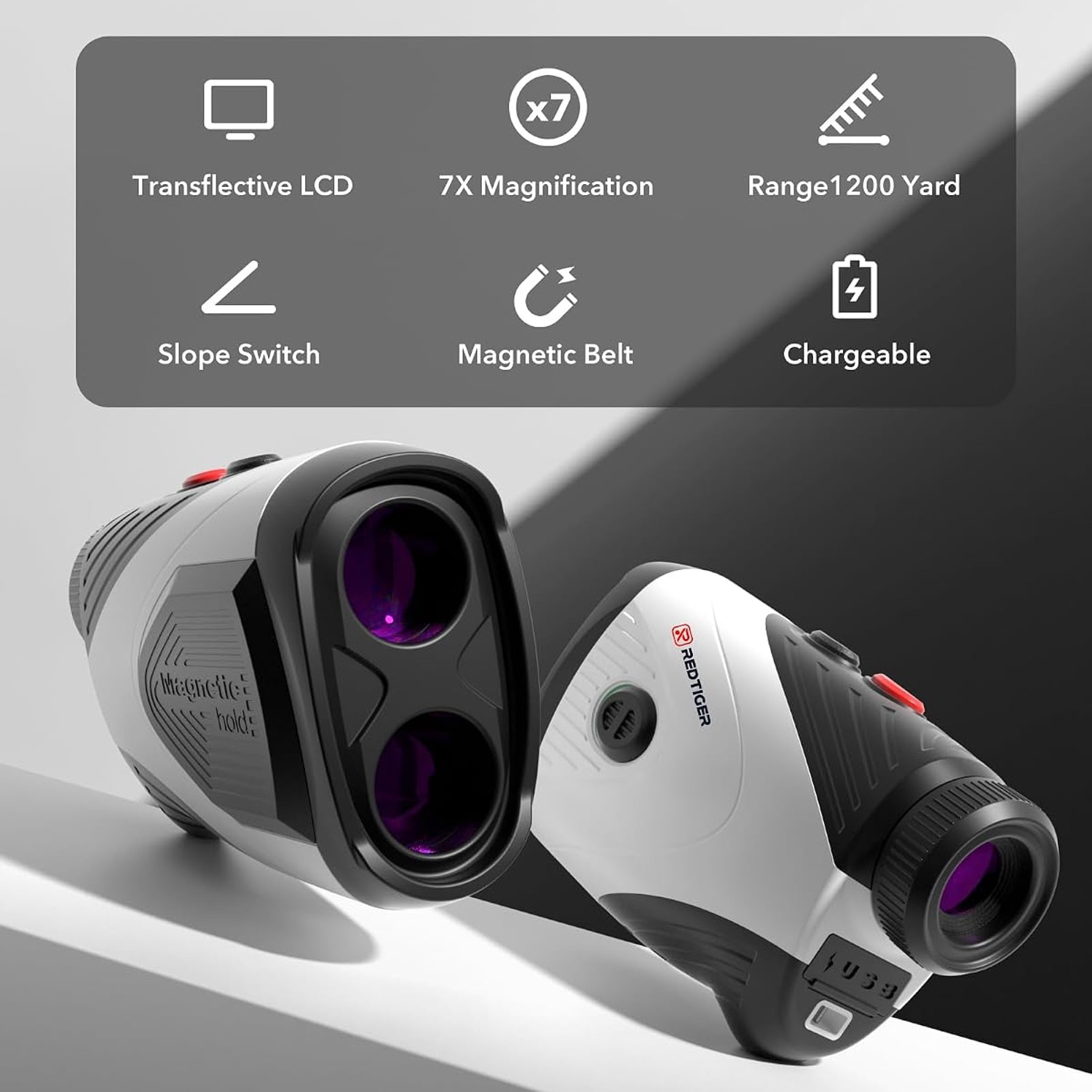
This Golf Rangefinder with Slope brings together laser measurement, flag-lock vibration and a magnified view. It also includes magnetic attachment and a soft case. Those features are worth comparing with how you play, how you carry your gear and how much time you want to spend learning a new device.
There are a few conflicting entries in the maker's description, too. This guide explains what is listed and where you should ask for more detail before buying.
Start with the distance information you need
A laser distance measurer for golf is aimed at a target to obtain a distance reading. That makes it a different buying choice from a device you choose mainly for maps or preloaded course information. Maps and course databases are not listed for this product.
Think about what you want to measure during a round. If you mainly want a reference to the flag, the flag-lock function deserves attention. If you also want to compare several targets, continuous scanning may be relevant.
The product lists six measuring functions. These include slope compensation, flag locking, horizontal and height ranging, speed measurement and continuous scan. More functions do mean more settings to learn. Start with the function you expect to use most, then read the manual before trying the others.
Understand what slope adds
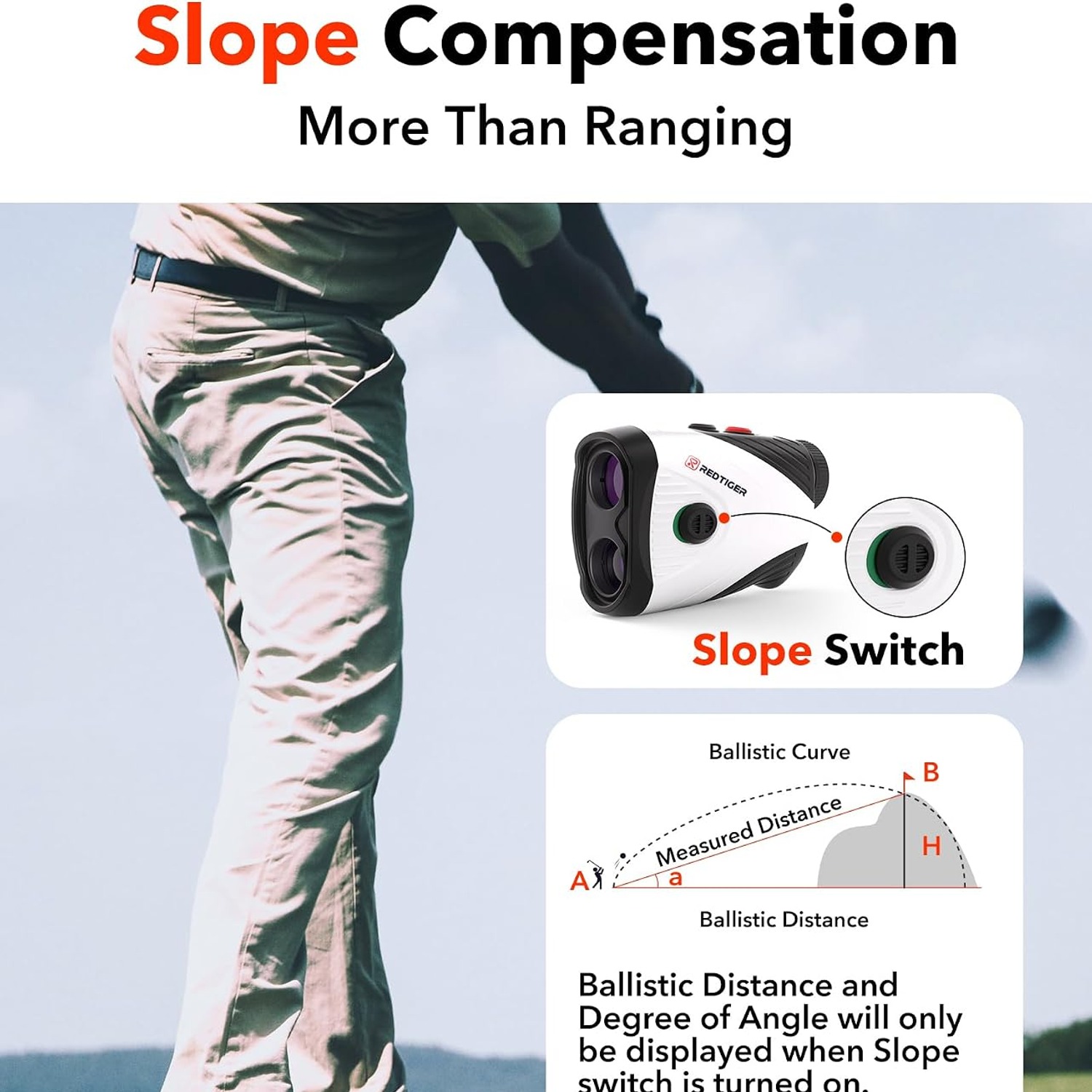
A slope compensation rangefinder provides an elevation-aware measuring option. That can be useful when your target sits uphill or downhill, since a straight distance reading alone does not describe the change in elevation.
It is still one piece of information. A reading cannot choose a club for you or account for every part of a shot. Use it alongside your own knowledge of your distances and the conditions you can observe.
Do not assume that a slope-equipped device is permitted in every event. The maker does not establish competition eligibility. Before using it in organised play, check the event rules and confirm how any required settings work. The supplied manual is the place to check the device's controls.
Consider flag lock and the viewing experience
Picking out a flag can take practice, especially when other objects sit behind it. This rangefinder with flag lock lists vibration feedback, giving you a tactile signal when flag lock is achieved.
The listed 7x magnification helps you view the target while aiming. A transflective LCD displays the reading. These are useful details to compare, but the maker does not specify eye relief, dioptre adjustment or display brightness settings.
If any of those viewing details are important to you, ask before ordering. Do not assume that a feature found on another golf flag finder is also present here.
Once you receive the device, practise aiming in a familiar setting before taking it into a round. Learn what the vibration means and how the display changes between functions. That is a more useful first step than trying every mode while other players wait.
Read the range figures with care
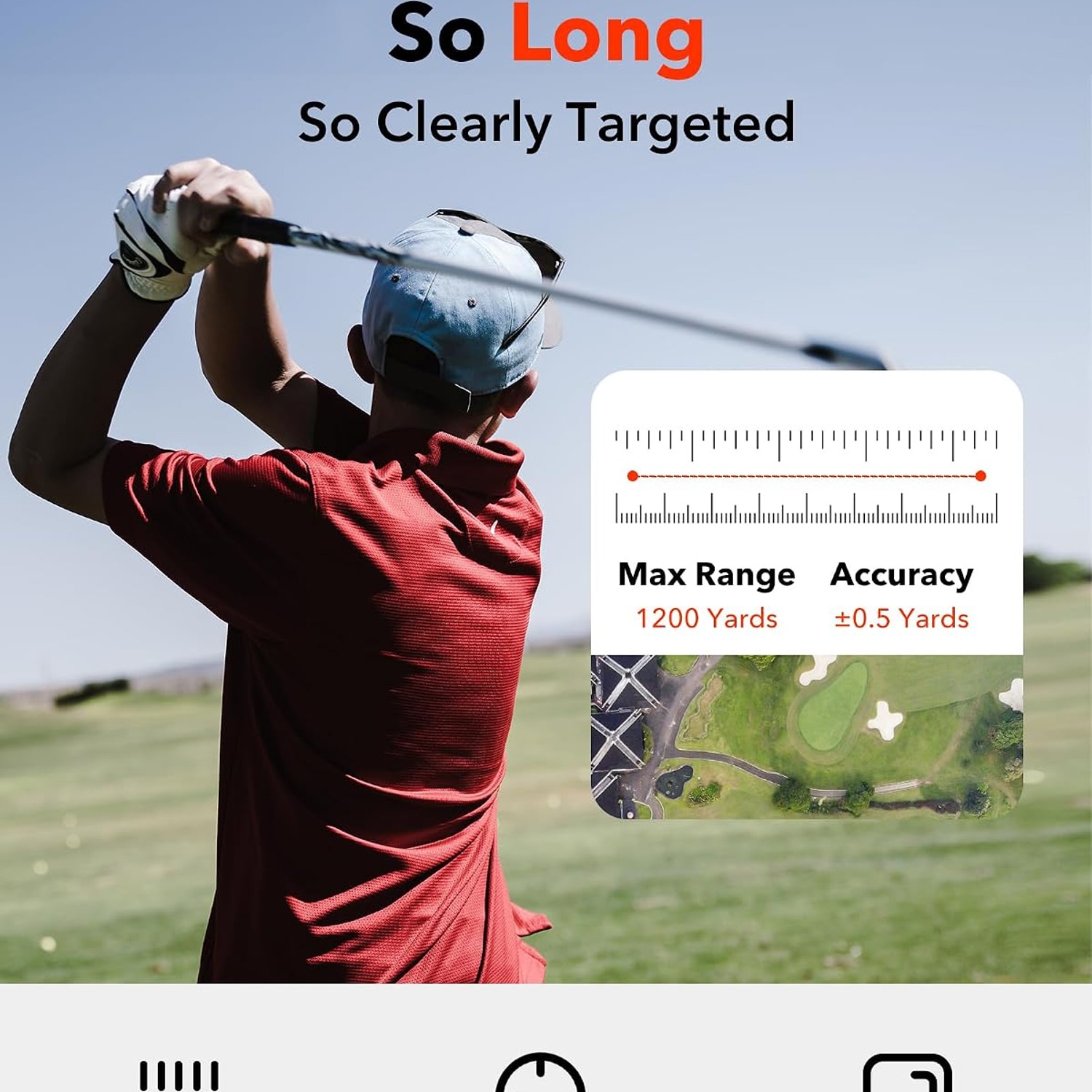
The source gives two range descriptions. The specification table lists 1100 metres. The feature text gives a range of 5 to 1200 yards. These are presented as separate entries rather than a single confirmed measurement in two units.
The feature text also states an accuracy of 0.5 yards. It does not explain the test conditions or provide a separate accuracy specification for every function. Treat it as a stated maker figure, not a guarantee for every target and situation.
When comparing models, look beyond the largest number on the page. Ask whether the stated range and functions fit your actual use. If a particular distance threshold is essential, seek confirmation before buying rather than relying on a rough conversion between the entries.
Check size against your carrying habits
This compact golf rangefinder measures 10.6 x 4.1 x 6 cm. The main weight field gives 181 g, while another source entry gives 181.44 g. The difference is small, but it is worth noting rather than presenting both as one exact figure.
Measurements help more than the word “compact” alone. Compare them with the pocket, pouch or bag compartment you plan to use. Leave room for taking the device out and putting it away without forcing it.
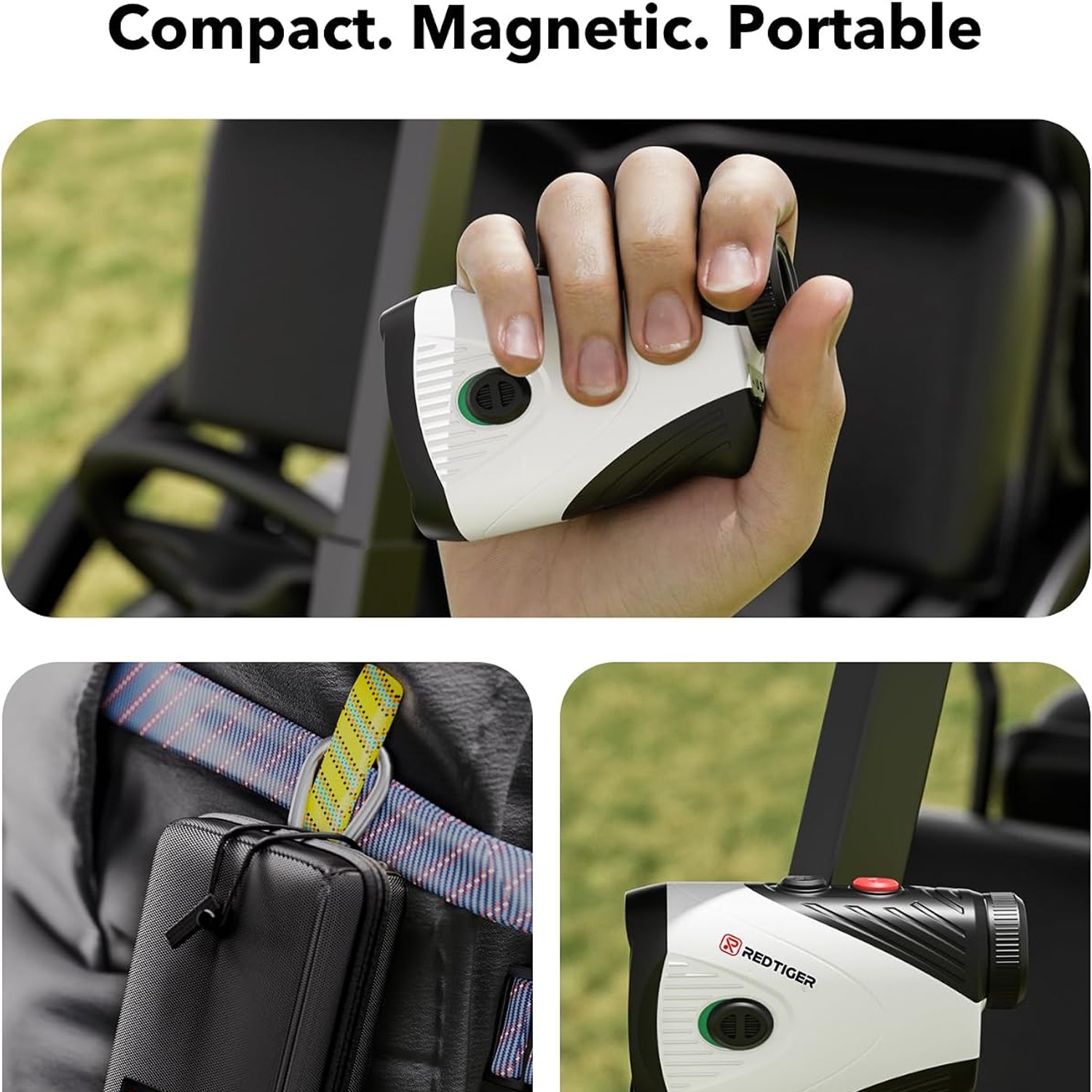
The kit includes a portable soft case, a hand rope and a mountaineering buckle. Those give you several carrying choices. No hand preference is stated, so do not assume a specific left-handed or right-handed design from the maker's description.
Decide whether magnetic attachment suits you
A magnetic golf rangefinder can be convenient if you have a suitable metal surface nearby. This model lists a magnetic strip and comes with a magnetic belt clip.
Think through where you would put it during a round. An attachment point should be easy to reach and easy to check before you move on. A magnet does not remove the need to make sure the device is properly attached.
Build a habit of checking your gear at the end of each hole and before leaving. If magnetic storage does not fit your routine, the included soft case offers another option. You do not need to use every accessory simply because it is in the box.
Plan for charging before a round
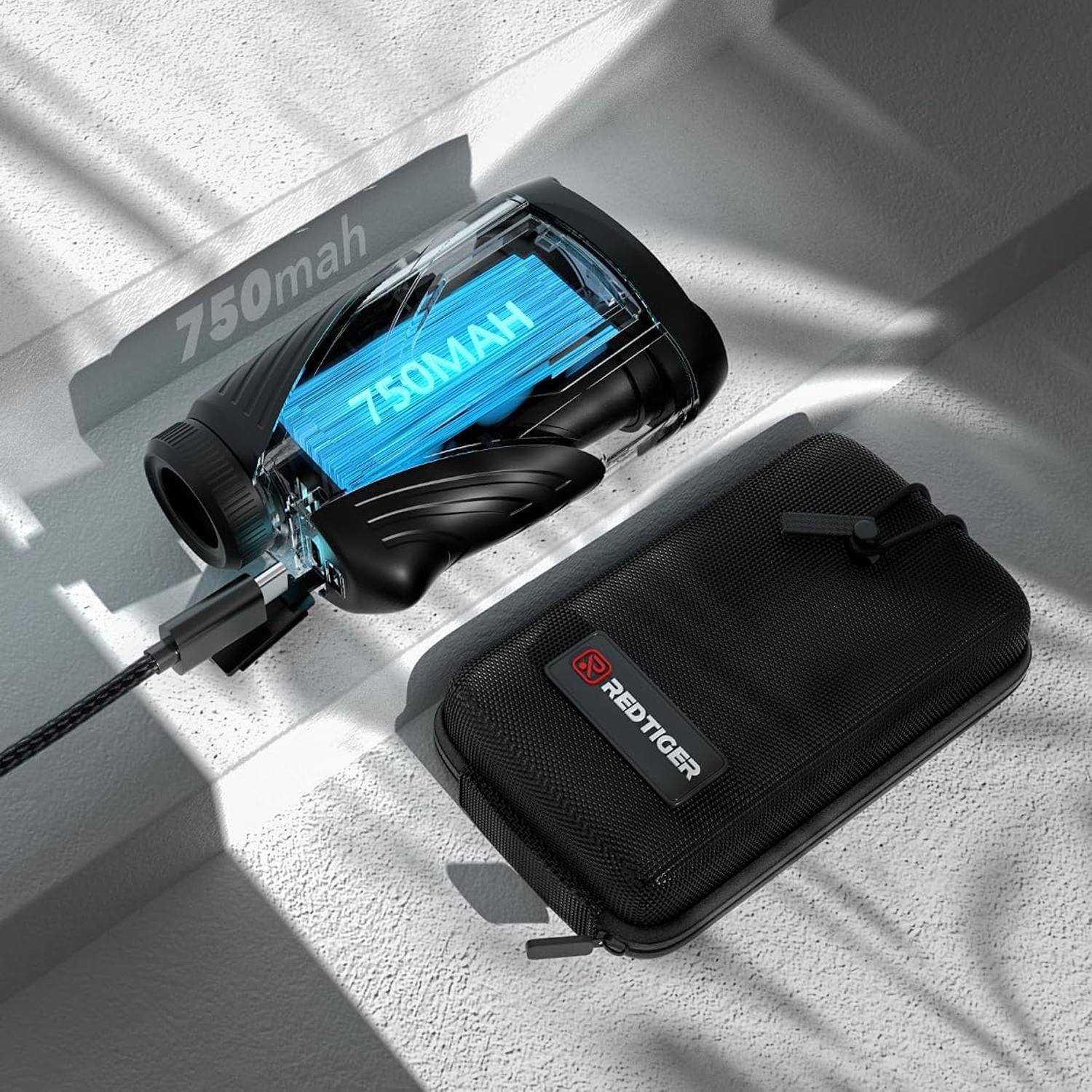
Rechargeable power is one of the listed features. This USB-C golf rangefinder also has a battery-level display and includes a charging cable. A wall power adapter is not named in the included-components list.
There is an important source conflict here. Alongside the rechargeable description, the specification table says C batteries are required and included. Confirm the actual battery format before buying if charging or replacement arrangements are central to your decision.
Battery capacity, runtime and charging time are not stated. Avoid planning around an assumed number of rounds per charge. Follow the manual, check the battery display before leaving and allow time for charging as directed.
Treat water resistance as a limit, not a promise
The maker describes the device as water resistant, but it gives both IP54 and IPX4 ratings. Because the entries differ, there is no single confirmed rating to rely on here.
Do not treat the rangefinder as suitable for immersion. Keep it out of standing water and let it dry before storage. If you regularly play in wet weather and need a specific protection rating, ask for that detail to be confirmed first.
The body is described in the specification table as white plastic. That does not establish drop resistance or any particular impact rating. Handle it as an optical measuring device rather than assuming the case or body protects it from every knock.
Review the included kit
The pack contains one rangefinder. Listed accessories are a magnetic belt clip, mountaineering buckle, hand rope, user manual, charging cable, lens cloth and portable soft case.
That is a useful list to check when the order arrives. Keep the packaging while you inspect the contents and read the instructions. If something listed is missing, contact us rather than trying to replace a part without checking what is required.
For cleaning, use the supplied lens cloth gently. Avoid abrasive cleaners and follow the manual for any detailed instructions. Wipe the exterior as needed and let it dry before putting it in the case.
Buying for yourself or as a gift
For your own use, choose around the features you expect to reach for often. Slope information, flag-lock feedback and carrying options may matter more to you than having several additional measuring modes.
For a gift, find out whether the recipient already uses a rangefinder. Some golfers have clear preferences about controls, viewing comfort and where they carry their device. A golf rangefinder gift is easier to choose when you know what they want to change about their current setup.
Delivery timing is not specified by the maker. Check the information for the delivery address before ordering, especially if the purchase is tied to a birthday or planned trip.
Check support and return terms
A two-year manufacturer warranty is listed. The detailed coverage and claim process are not provided by the maker, so confirm those terms if they affect your choice.
Change-of-mind returns are available within 14 days counted from delivery. The customer pays return postage. Your rights under provincial consumer protection law also apply.
Use that information to plan a prompt inspection when the parcel arrives. Check the contents, read the manual and raise questions early. Keep warranty questions separate from change-of-mind returns, since they address different situations.
The short version
This Golf Rangefinder with Slope offers flag-lock vibration, 7x magnification, magnetic attachment and listed USB-C charging in a handheld format. It comes with a soft case and several carrying accessories.
It is worth considering if those features match your routine. Before choosing, resolve any questions about the conflicting battery and water-resistance entries, and confirm event requirements if you plan to use it in competition. A careful match to your needs matters more than the longest feature list.