

The complete guide
A Practical Guide to Choosing Golf Alignment Sticks
When your setup is hard to judge
It can be hard to tell where you are aiming when you are standing beside a golf ball. Your feet may look square to you, yet the line you intended to follow may be somewhere else. Without a reference on the ground, you are relying on what feels right.
Golf alignment sticks give you a visible line to compare with your setup. They do not read your movement or explain why a shot went off course. Their role is simpler. They let you put a reference in place, step back and look at how you have arranged yourself around it.
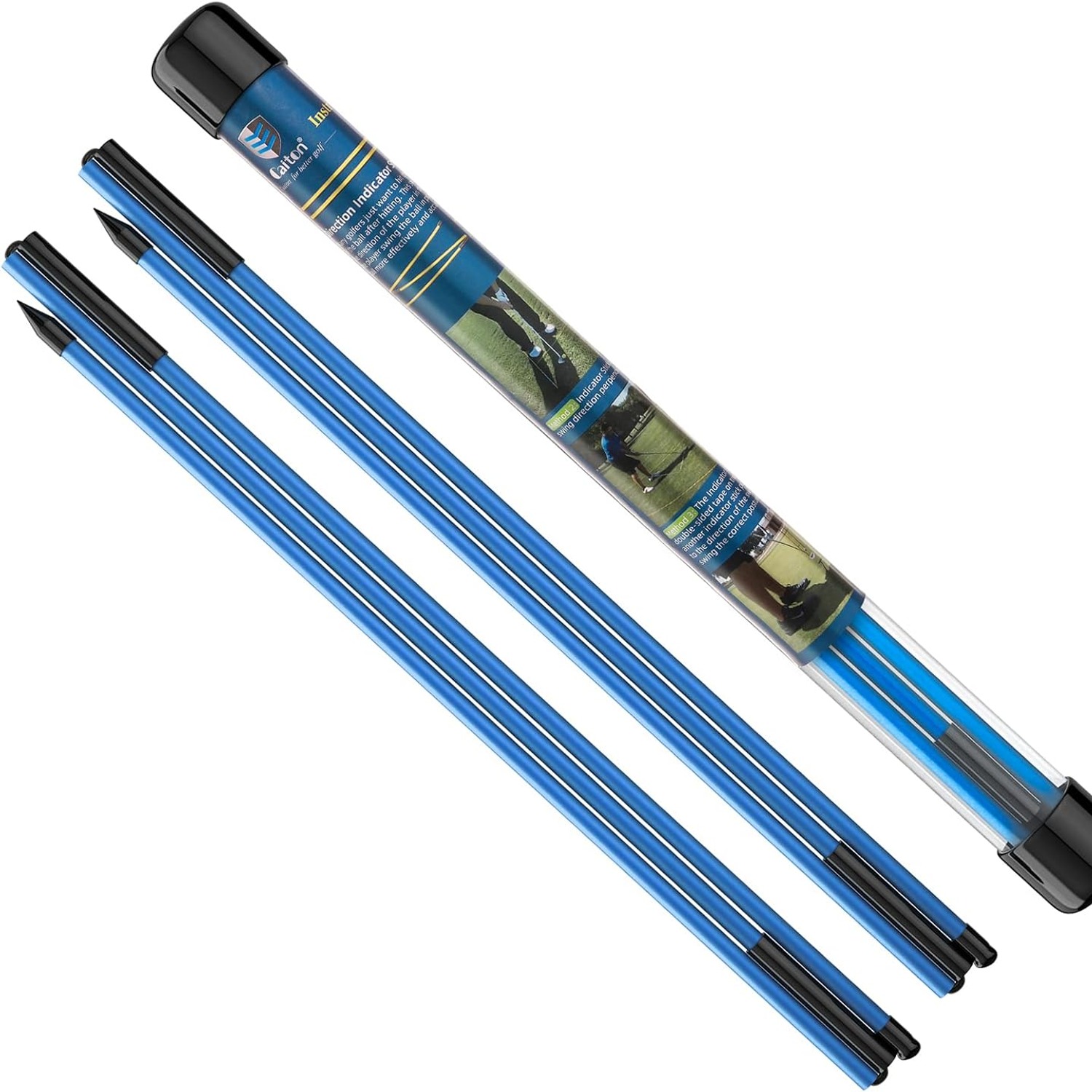
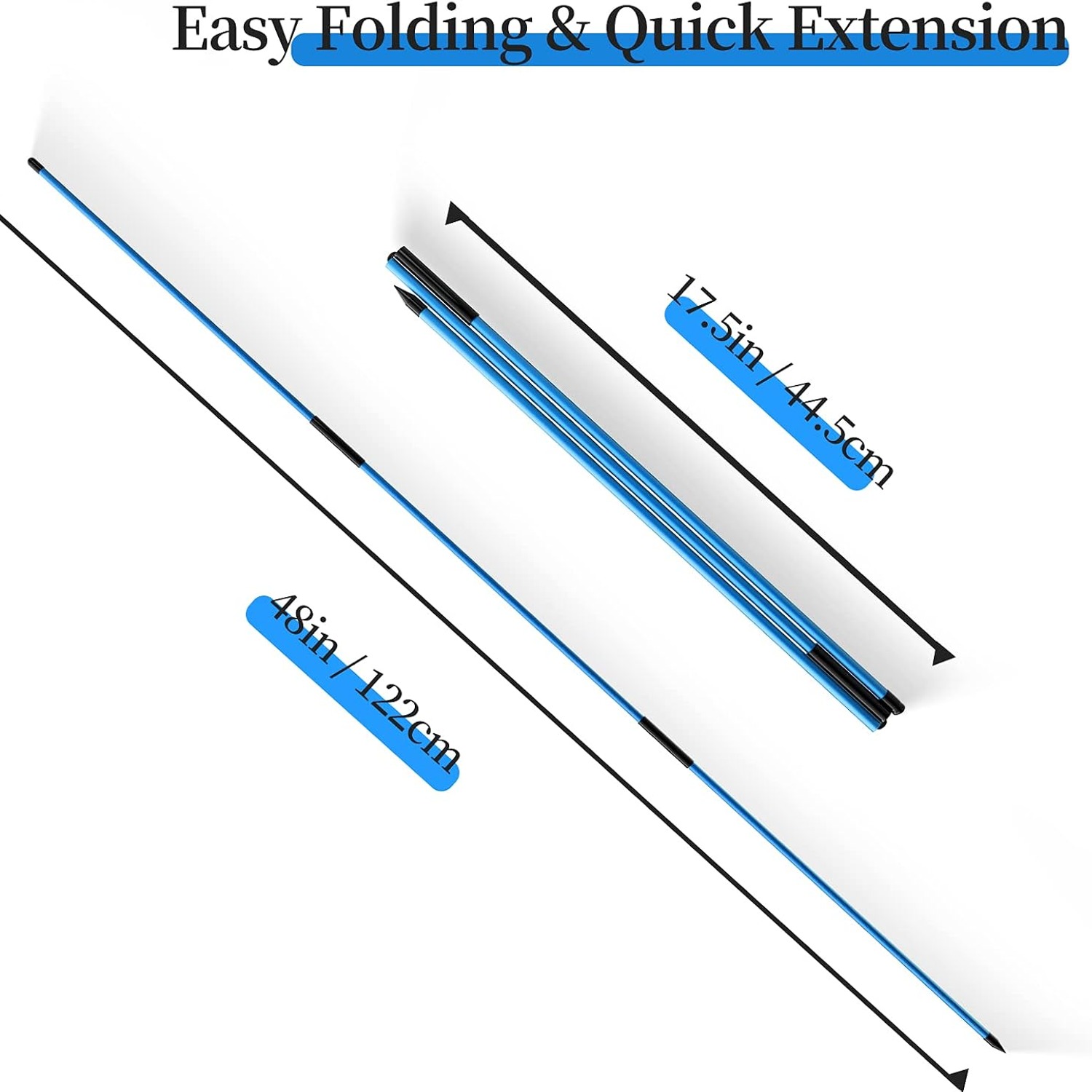
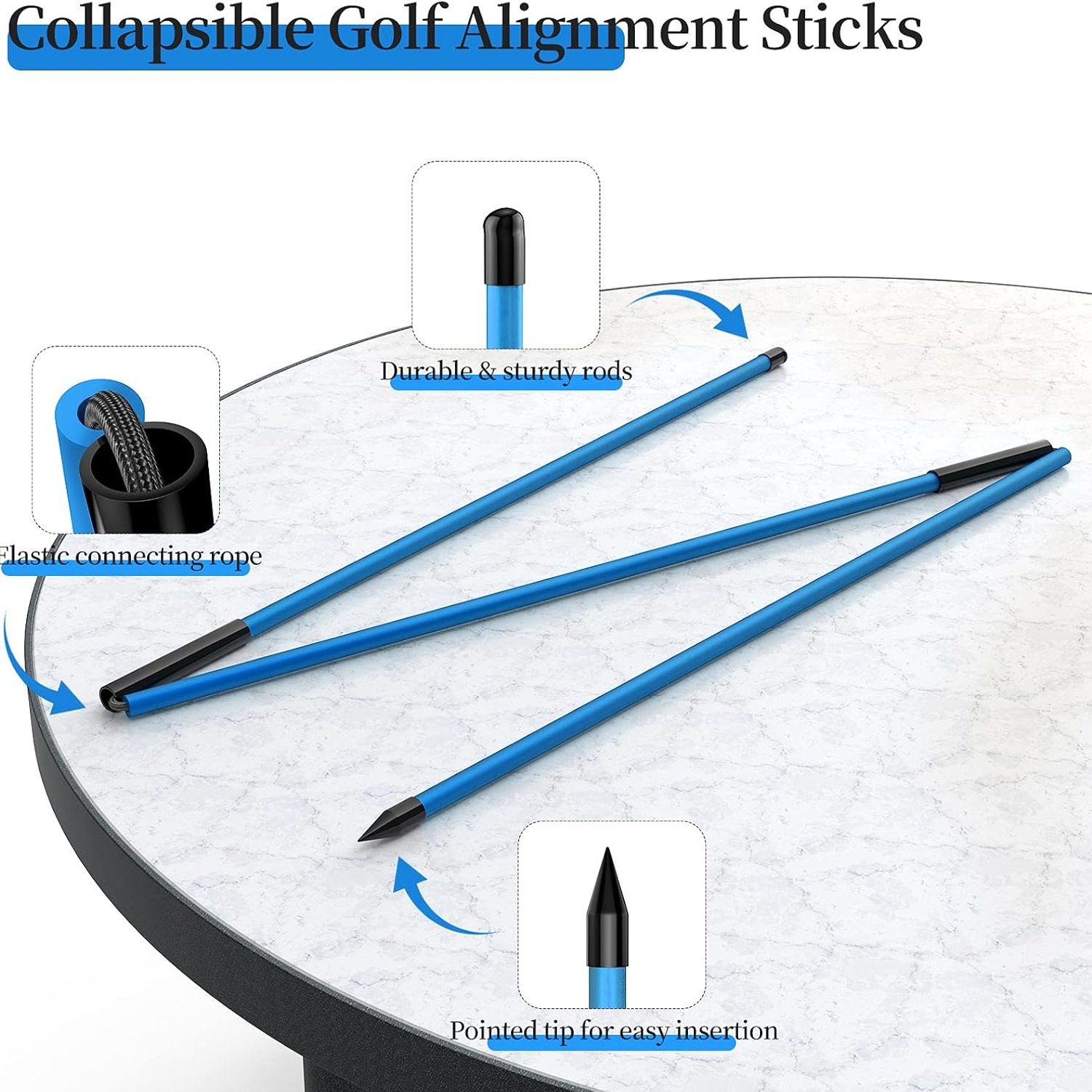
This set includes two blue folding rods. Each has a stated full length of 122 cm and folds into three sections. If you want a straightforward practice tool rather than a device with measurements or feedback, that is the main idea to weigh up.
What comes with this set
The listed pack size is two sticks. The maker describes fiberglass construction, pointed tips and a folded length of 17.5 inches. No carrying case or extra training accessories are specified, so base your decision on the rods themselves.
The product dimensions are listed as 122 x 0.99 x 0.99 cm. The main item weight is 184 g, although the source also contains slightly different weight figures. It is better to use the main listed weight as a guide than to assume a precise weight for each individual rod.
A two-rod set gives you more layout options than a single reference line. For example, you can use one rod for direction and another as a separate setup reference. The exact arrangement should follow the drill you are doing, not a layout chosen at random.
How alignment rods work
An alignment rod makes a line visible. That may sound basic, but a clear reference can make a practice task easier to understand. Instead of asking whether your feet feel aligned, you can compare their position with something you can see.
For a simple setup check, choose a target and place a rod on the ground along the reference direction you want to use. Stand back to check that direction before taking your position. Keep the rod outside the area where your club will travel.
Be careful about the difference between the ball-to-target line and a parallel stance reference. A rod beside your feet is not in the same place as the ball. If you are unsure how to arrange your golf aiming sticks, ask an instructor to show you a layout for your particular drill.
Using the second stick with purpose
Having two rods does not mean every practice session needs a complicated pattern. Start with one clear task. You might be checking the direction of your feet, or using a separate reference to look at ball position.
The second rod can make that relationship easier to see. However, it does not tell you what the correct position should be for every club or shot. A golf ball position aid is a reference tool, not a universal template.
Before hitting balls, explain the purpose of the layout to yourself in one sentence. If you cannot say what you are checking, simplify it. A clear drill gives the rods a useful role and helps you avoid moving them around without a reason.
Who this type of set suits
The maker lists beginner practice among the intended uses. That makes sense for golfers who want a visible way to learn setup references. A beginner can look down, compare positions and ask more specific questions during a lesson.
Golfers with an established routine may also want a golf setup alignment tool for occasional checks. Familiar movements can be difficult to judge by feel alone. A rod gives you something external to compare with, though it does not replace a coach's view.
This set is less suited to someone who expects measured feedback. It does not state swing speed, face angle or other readings. Choose it for visible reference lines and folding storage, rather than features the maker's description does not provide.
Full-swing and driving-range practice
Full-swing practice is one of the listed uses. As a driving range training aid, the rods can mark references while you work through a suitable drill. Place them carefully and keep the hitting area clear.
Start by checking the layout without swinging. Look at where the ball sits, where your feet will go and where the club will move. A useful ground reference should not become something you have to avoid during the swing.
Follow the practice venue's rules as well. Some surfaces or hitting bays may not suit every arrangement. If space is tight, use a simple setup check without hitting rather than trying to fit a full drill into an unsuitable area.
Putting and short-game use
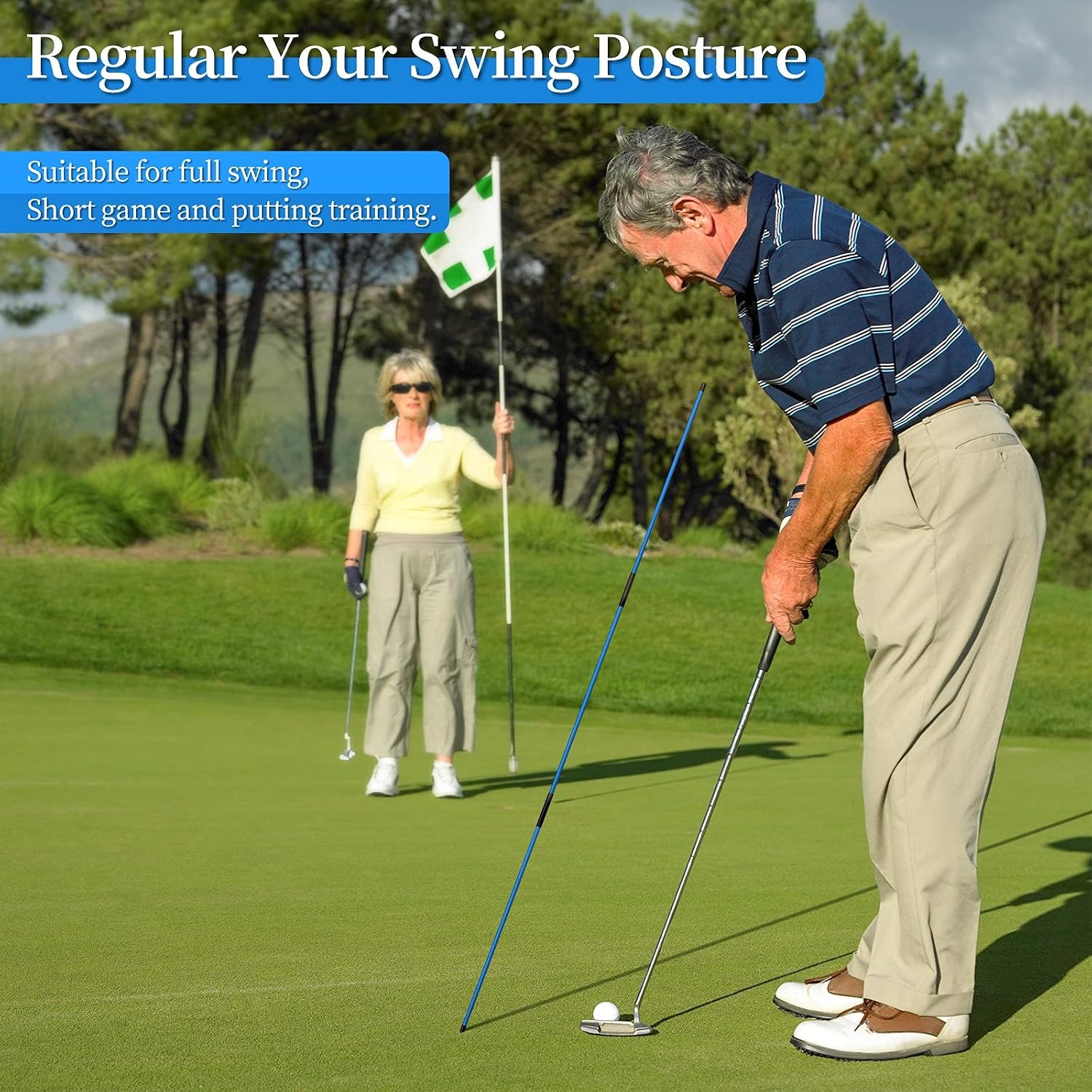
Putting alignment sticks can provide a visual reference during a practice session. The useful arrangement depends on what you are checking, such as your setup direction or a chosen starting line.
Keep the distinction between a reference and a result in mind. A rod laid on the surface does not read the slope or tell you how hard to strike the ball. It shows the line you have chosen, which you can then discuss or review.
Short-game practice is also listed. As with full swings, keep rods clear of club contact. If you want a short game practice aid for a particular drill, confirm that the rod length and available space suit that drill before buying.
Folding size and transport
The three-section design is worth considering if you do not want to carry a fixed-length rod. Each stick folds to a stated 17.5 inches, compared with its full length of 122 cm.
Measure the space where you plan to store it. A bag may have plenty of overall length but a smaller pocket opening or an awkward internal shape. Folding construction alone does not confirm that the rods will fit your chosen compartment.
Portable golf training sticks still need sensible packing. Avoid forcing the folded sections into a crowded space, and keep the pointed tips away from items they could mark. A storage case is not listed, so do not count on receiving one.
Indoor practice and pointed tips
Indoor and outdoor use both appear in the maker's description. Indoors, the first question is space. Allow room for the whole activity, including the club if your drill involves one, rather than measuring only the area occupied by the rods.
The pointed tips are intended for ground placement. They should not be pressed into indoor flooring, mats or other surfaces that could be damaged. At a practice venue, ask permission before inserting them into turf.
You can also use a rod as a visible reference while it lies on a suitable surface. Check that it stays where intended before starting. If the room or surface does not suit the drill, choose another location or a different practice task.
Care between sessions
Simple care is a sensible starting point. Wipe dirt away with a soft, damp cloth, then allow the rods to dry before folding and storing them. Pay attention to grit around the folding areas.
Do not force a section that does not move as expected. Check for trapped dirt or visible damage first. Inspect the rods and tips before practice, especially after transport or accidental contact.
No specific service life or warranty is stated in the maker's description. Treat the set as practice equipment that needs checking, rather than assuming the material or folding design makes it suitable for rough handling.
Check the details before ordering
Compare the full length and folded length with your intended use. Think about whether you want two reference lines, where you will practise and how you will carry the sticks. Those practical details matter more than finding the longest feature list.
If you are buying a gift, check whether the golfer already owns a set. Folding golf alignment sticks may be useful to someone who wants this storage format, but a duplicate may not add much to their routine.
Delivery timing is not specified by the maker, so check the information for your address before ordering. Change-of-mind returns are available within 14 days of delivery, with return postage paid by the customer. Your rights under provincial consumer protection law also apply.
The short version
This golf alignment stick set contains two blue fiberglass rods with pointed tips and a three-section folding design. Each has a stated full length of 122 cm and folds to 17.5 inches.
Choose it if you want visible references for setup, putting or other suitable practice drills. Check your space, bag fit and drill requirements first. The rods provide the lines; a clear practice plan gives those lines a purpose.