
The complete guide
A Buyer's Guide to Choosing an Indoor Golf Putting Mat
Finding room to practise putting can be harder than finding a few spare minutes. A trip to a practice green takes planning, while a bare floor gives you no fixed target or distance markers. A home putting mat offers a defined place to set down a ball and work through a few putts.
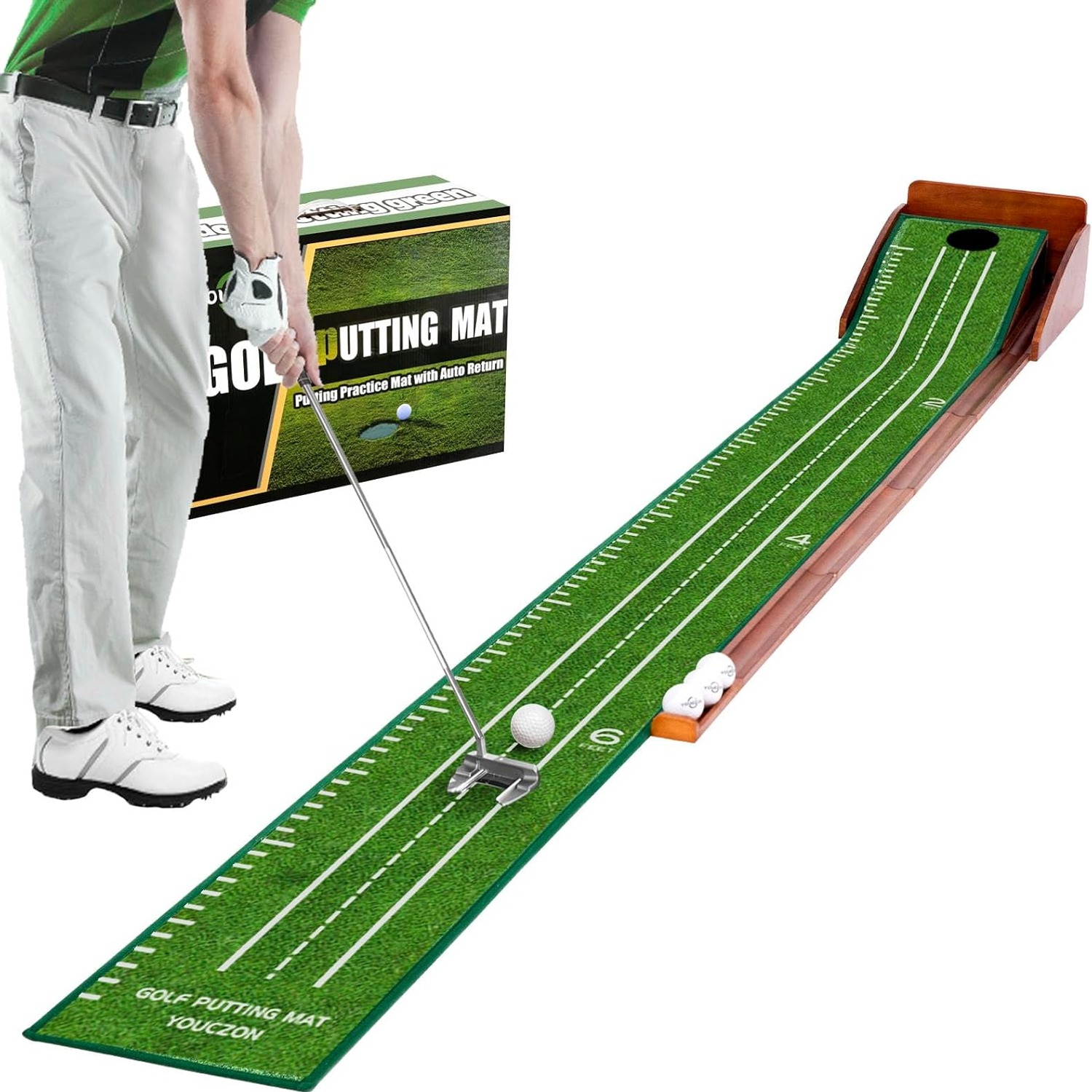
This Indoor Golf Putting Mat combines a single-hole target, alignment guides, and an automatic ball return. It is listed for home, office, or outdoor use, with a foldable format for storage. Before choosing it, the main questions are practical. Does it fit, does it offer the practice layout you want, and do you already have the other equipment you need?
What this mat brings to a practice space
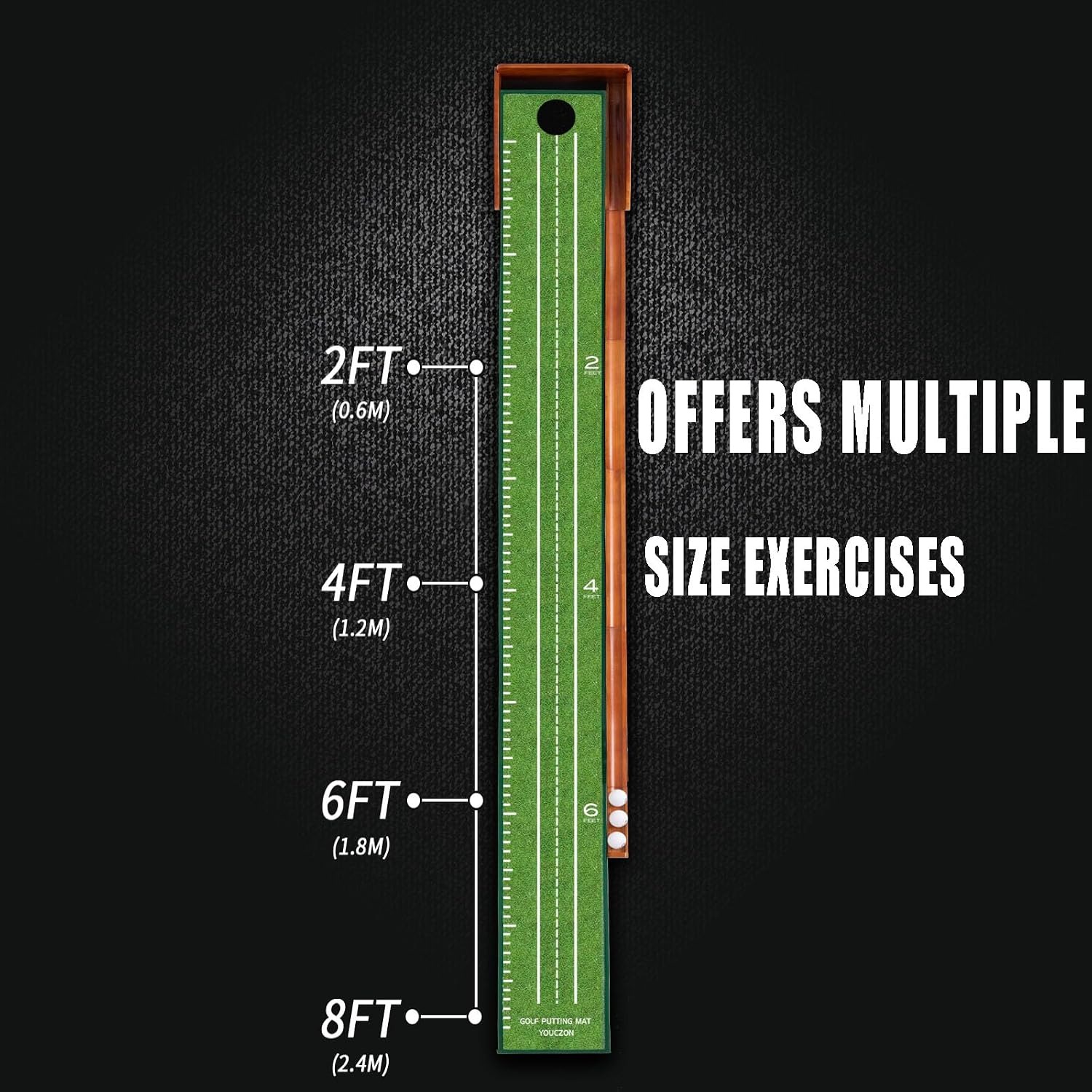
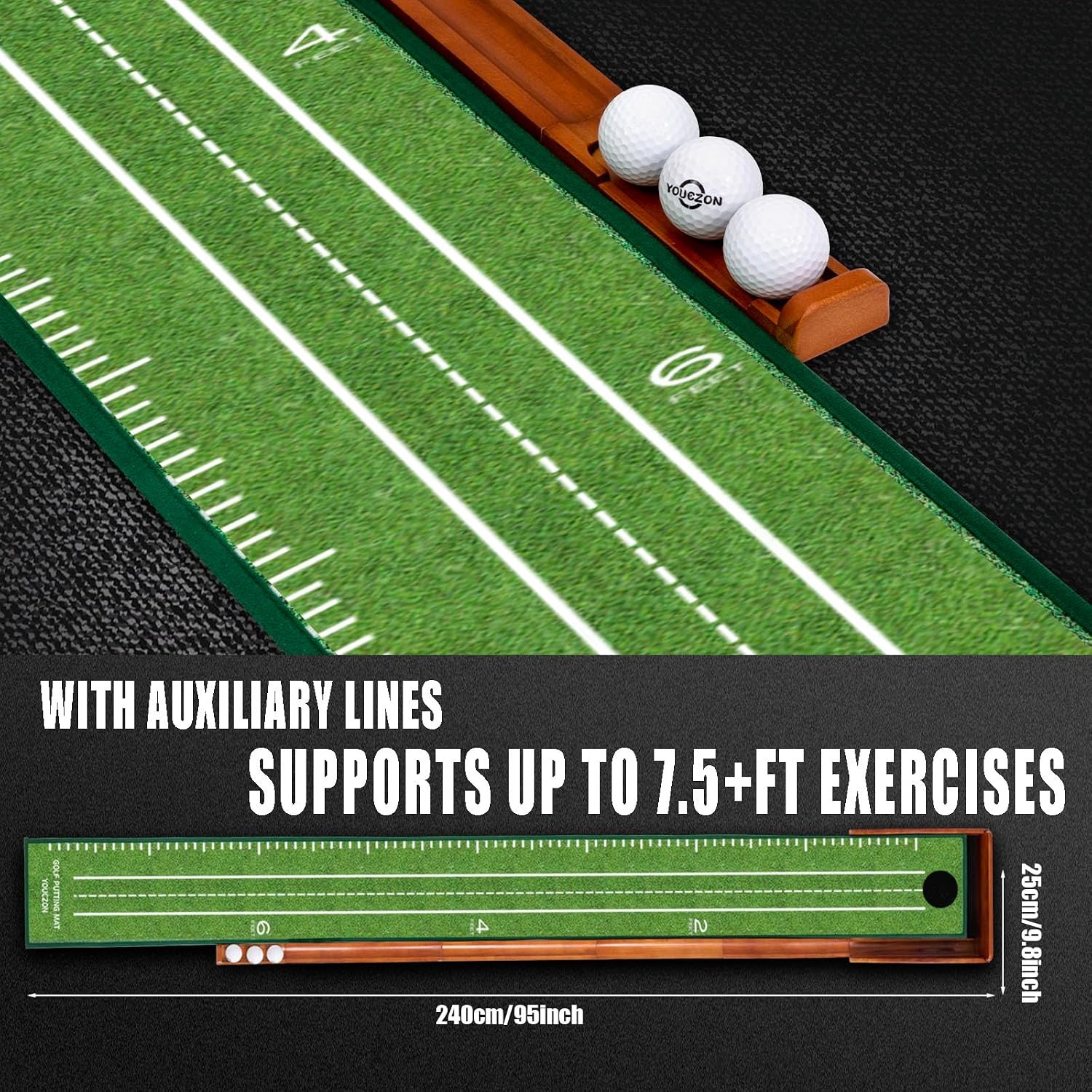
A dedicated golf putting practice mat gives your session a clear start and finish. Instead of choosing a new target each time, you have a hole and marked reference points. The listed practice range is 2 ft to 7.5 ft.
That range lets you change your starting position without changing the whole setup. You might begin close to the hole, then move farther back as part of the same session. The distance markers help you return to the same point later.
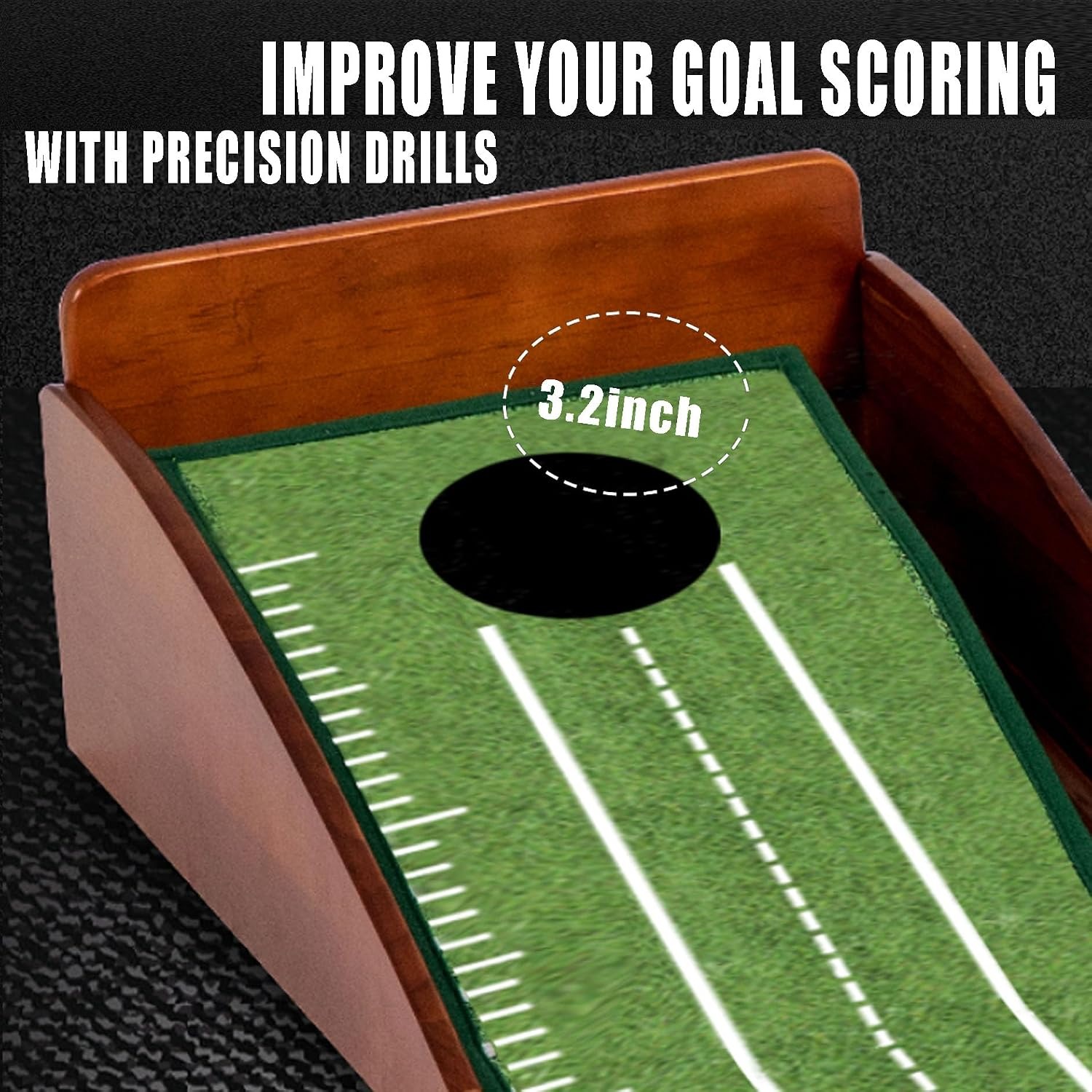
The mat has one hole. It is a focused piece of golf practice equipment rather than a broad practice area with several targets. Think about whether that simple layout matches how you like to spend your practice time.
How the automatic return helps
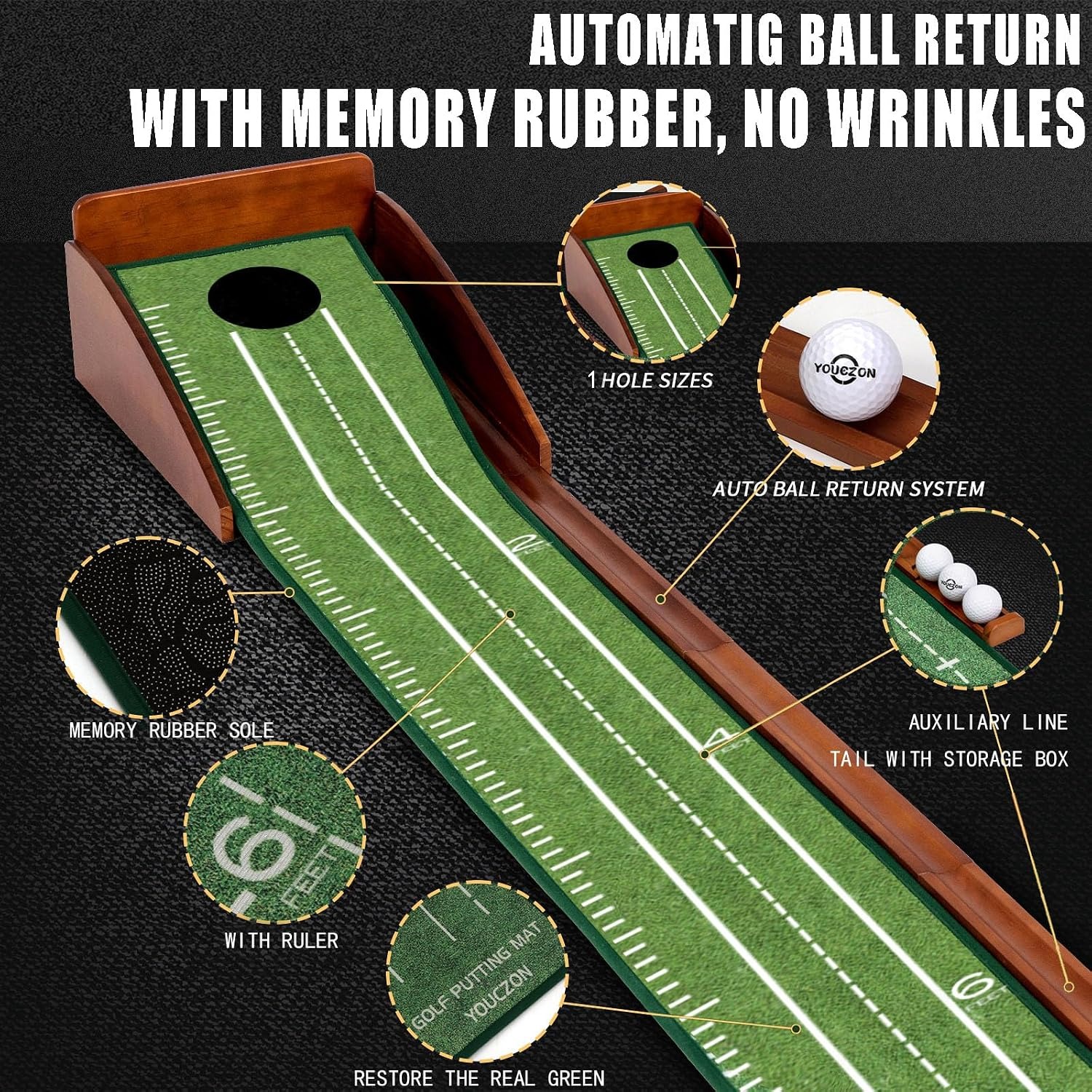
Walking to collect a ball after each attempt can break up a short session. A putting mat with return is designed to reduce that repeated walk by sending the ball back after a putt.
The return is listed as automatic, but the maker does not explain its mechanism. It also does not state whether a power source is needed. Those details should be checked in the supplied instructions rather than guessed from the product name.
When setting up an automatic ball return putting mat, keep the return path clear. Leave enough room around the unit to check its position and retrieve a ball if needed. The return is a useful convenience, but it is still worth checking the setup before you begin.
Measure the room before choosing the mat
The overall dimensions are listed as 300 cm long, 30 cm wide, and 1 cm thick. Another size entry gives 9 feet 10 inches by 12 inches. Use a tape measure to picture that long, narrow shape in your room.
Do not measure only the strip where the ball will roll. You also need space beside it for your feet and putter. Nearby furniture, a door opening, or a busy walkway can make a space less useful than it first appears.
There is an important detail to resolve if your room is tight. Separate floor measurements in the maker's description give 8 feet by 9.8 inches, which do not match the overall dimensions. Ask for confirmation before buying if a small difference would affect the fit.
Look at the surface and base separately
The product details describe a light green velvet surface, a solid wood base, and rubber backing. Each is a separate part of the construction. The wood description does not mean the whole mat is made from wood.
The surface is described as wrinkle-free, while the backing is described as non-slip. These are the listed features, not a reason to skip checking your floor. Start with a clean, level area and make sure the mat sits as intended.
If you are comparing a wooden base putting mat with another style, look beyond appearance. Check the overall footprint, storage method, and return arrangement. Those details may matter more in daily use than how the base looks in a product photo.
Understand what the markings offer
A putting mat with distance markers makes it easier to select a starting point. Alignment guides provide another visible reference on the practice surface. Together, they give you a repeatable layout without needing to add your own marks.
You can keep a session simple. Choose one distance and use the same reference point for a few attempts. Then change the distance if you want a different task. There is no need to make every session long or complicated.
The markings do not come with a stated promise of better scores. They are aids for organising practice. Your results will depend on how you use the mat and on other factors that the maker's description does not measure.
Who this layout may suit
The maker's description names both beginners and experienced golfers. A beginner putting mat can be useful when clear reference points are more helpful than an open patch of floor. Someone with more experience may prefer it as a place for a familiar practice routine.
It may also suit a household where equipment cannot stay out all day. The foldable format offers a storage option once the session is over. However, folded dimensions are not given by the maker, so do not assume it will fit a particular cupboard or shelf.
For someone wanting a wide practice area or several holes, the narrow, single-hole layout is worth considering carefully. Choose it for the layout it has rather than expecting features that are not listed.
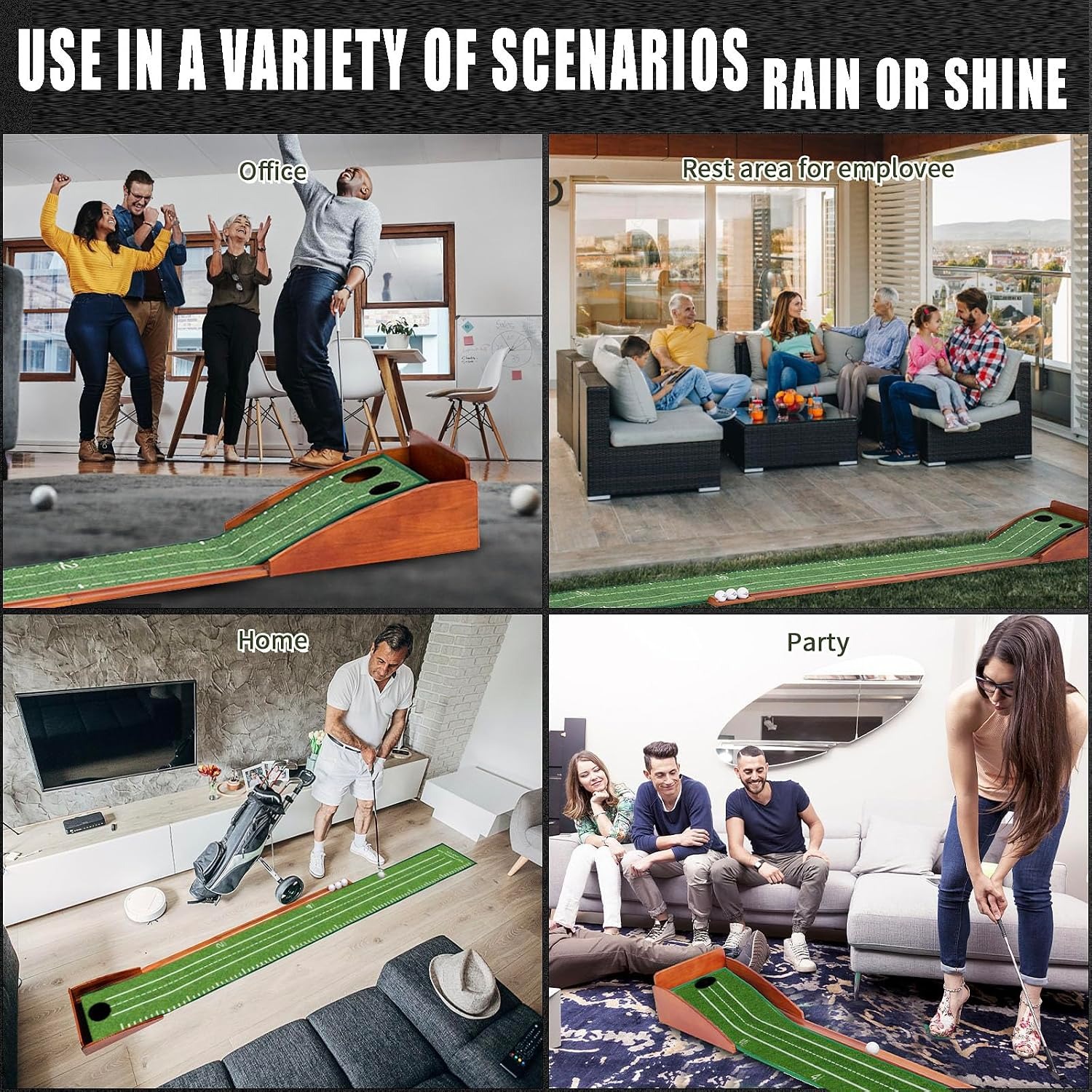
Home, office, and outdoor use
At home, look for a space where the mat will not block normal movement through the room. A long open area may work, but check the full setup with your stance included. A narrow putting mat still needs usable space beside it.
An office putting mat needs the same thought. Keep doors, chairs, and shared paths in mind. Being able to fold it away is helpful only if there is also a suitable place to store it.
Outdoor use appears in the maker's description, but weather resistance does not. That distinction matters. Do not treat it as a permanent outdoor putting green or leave it exposed to rain simply because outdoor use is mentioned.
Know what is included
The included-components entry lists one putting mat. It does not list a putter or golf balls. If you are buying your first home golf practice setup, account for those items separately unless the order details say otherwise.
This is especially important when choosing a golf practice gift. A recipient who already plays may have the equipment they need, but it is better to check. You should also confirm that they have enough floor space.
Assembly details are not provided by the maker. No tools, setup time, or return power requirements are stated. Allow time to read the instructions when it arrives rather than planning around an assumed setup process.
Keep expectations about roll realistic
An indoor putting green provides a practice surface, but that does not establish how closely it matches a course. The maker does not include a green-speed rating or a measured comparison with natural grass.
The mat's velvet surface is a stated construction detail. Claims about exact pace, consistency across different floors, or results on the course would go beyond the maker's details.
When comparing options, separate known details from unanswered questions. Here, the dimensions, weight, hole count, materials, and marked practice range are listed. Exact roll speed and the return mechanism are not. That is a useful basis for deciding what else you need to ask.
Care and storage between sessions
Keep loose dust and debris off the practice lane and out of the return path. Gentle cleaning is a sensible starting point. Avoid soaking the surface or wooden parts, and follow any care instructions supplied with the product.
For storage, use the intended folding method. Do not force sharp creases into the mat or place heavy objects on top of it. The foldable description does not provide a folding pattern, so check the instructions first.
Store it dry. If you use it outdoors, bring it back into suitable storage afterward rather than assuming the materials are weatherproof. A brief check before each session can also help you spot objects left on the surface.
Delivery, warranty, and returns
Check the estimate for your address at checkout, especially if the mat is intended for a gift or a specific date.
The product details list a one-year warranty, but they do not explain its scope or claims process. A warranty is separate from a change-of-mind return period. Ask about any cover that matters to your decision before buying.
For change-of-mind returns, the store allows 14 days from delivery, with return postage paid by the customer. Your rights under applicable provincial consumer protection law also apply. Check the mat promptly after arrival so there is time to raise any concerns.
The short version
This short putt practice mat offers a single hole, marked practice distances from 2 ft to 7.5 ft, and automatic ball return. Its listed construction includes a velvet surface, solid wood base, and rubber backing.
Measure for the 300 cm overall length, allow room for your stance, and resolve the conflicting floor measurements if space is close. Check that you have a putter and balls. If that layout fits your room and practice plans, it is a straightforward option to consider for regular putting at home.